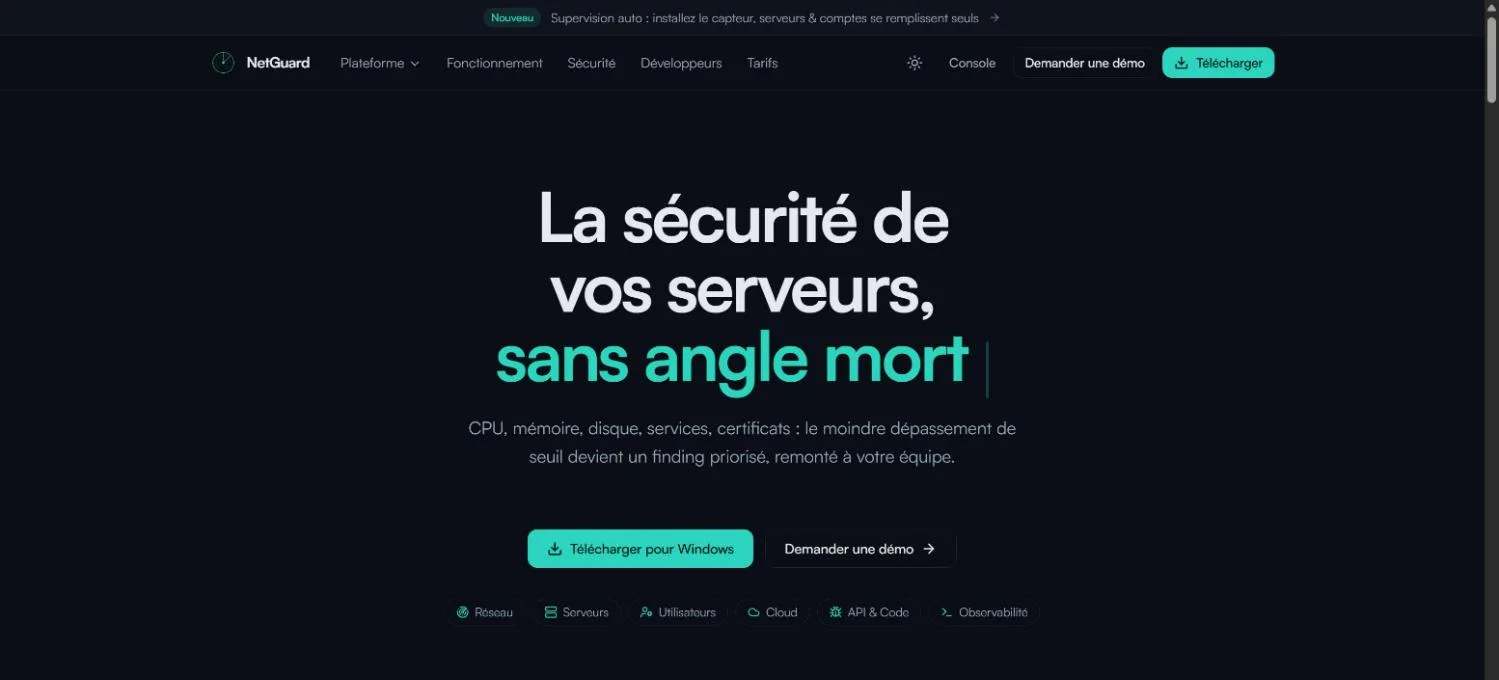
 NetGuard
Network forensics: a desktop sensor analyses the Wi-Fi or local network and returns a Safe, Suspicious or Dangerous verdict with pcap evidence, for a backend that serves several organisations.
The starting constraints
- Real network forensics (packet capture, ARP table, interception) is only possible on a computer: iOS and Android restrict it.
- Hence a sensor on a desktop machine, and a mobile app as a simple companion.
The decisions, and why
The model suggests, the rules set the bounds
A duplicated MAC address on the gateway forces “Dangerous”; a low-confidence “Dangerous” drops back to “Suspicious”. A forensic tool that cries wolf loses all credibility.
docs/CONCEPTION.md §6.3Two separate identities: people and sensors
People get a JWT and a role per organisation. A sensor receives a single-use enrolment token, then a revocable device token.
docs/CONCEPTION.md §2-3Evidence does not travel inside the JSON
pcap files go to MinIO through a presigned URL and are signed with SHA-256, instead of bloating the API with base64.
docs/CONCEPTION.md §2The sensor's token sleeps in the system keychain
Not in local storage that any script in the WebView could read.
desktop/src-tauri/Cargo.toml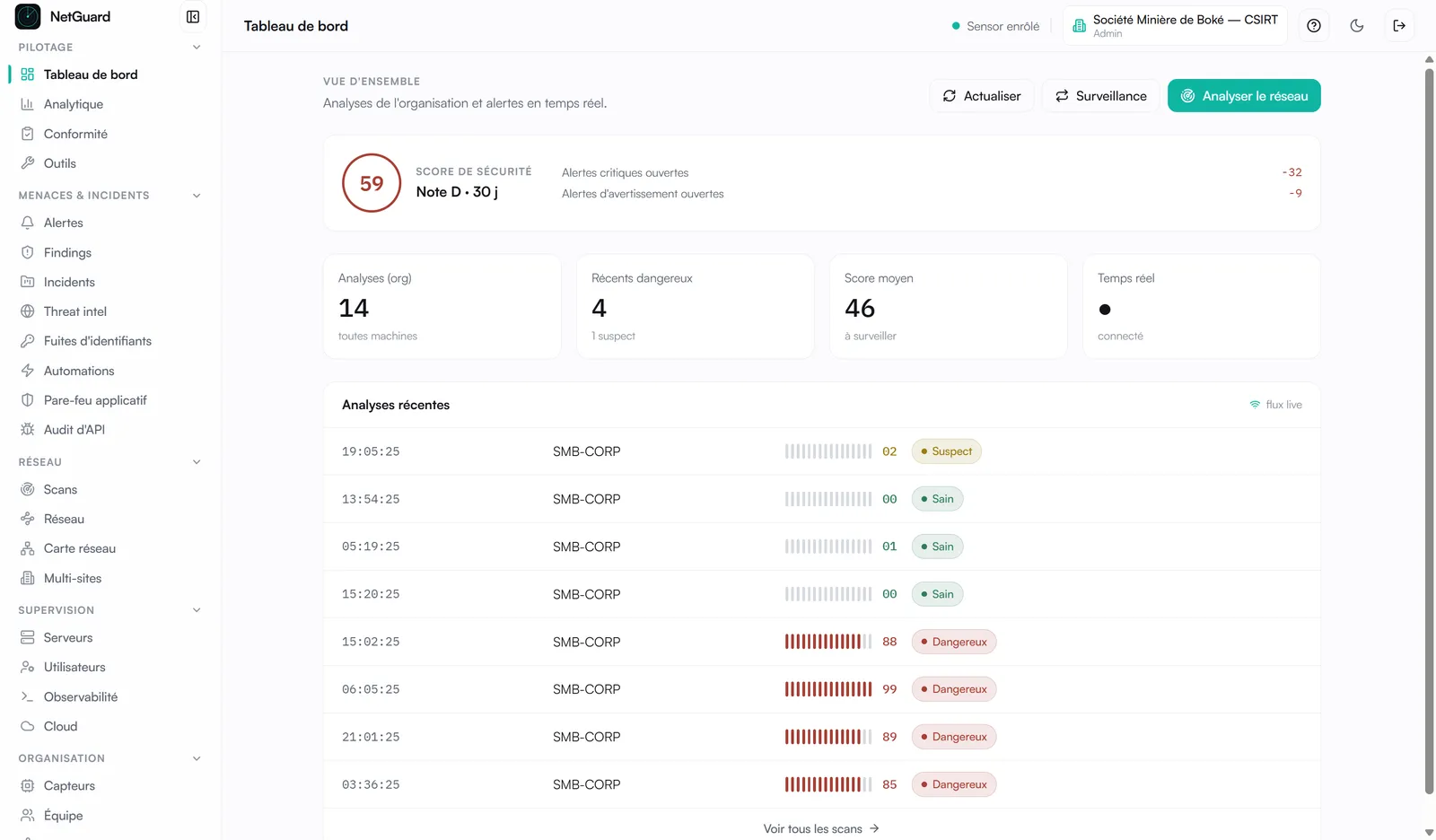
The numbers, counted in the repository
515
commits, July → October 2026
git log
326
routes, 71 routers
backend/app/api/v1
630
tests: 612 backend, 18 Rust
test_ functions and #[test]
79
Alembic migrations
versions/
What does not work yet
- The model is trained on 4,000 synthetic samples.
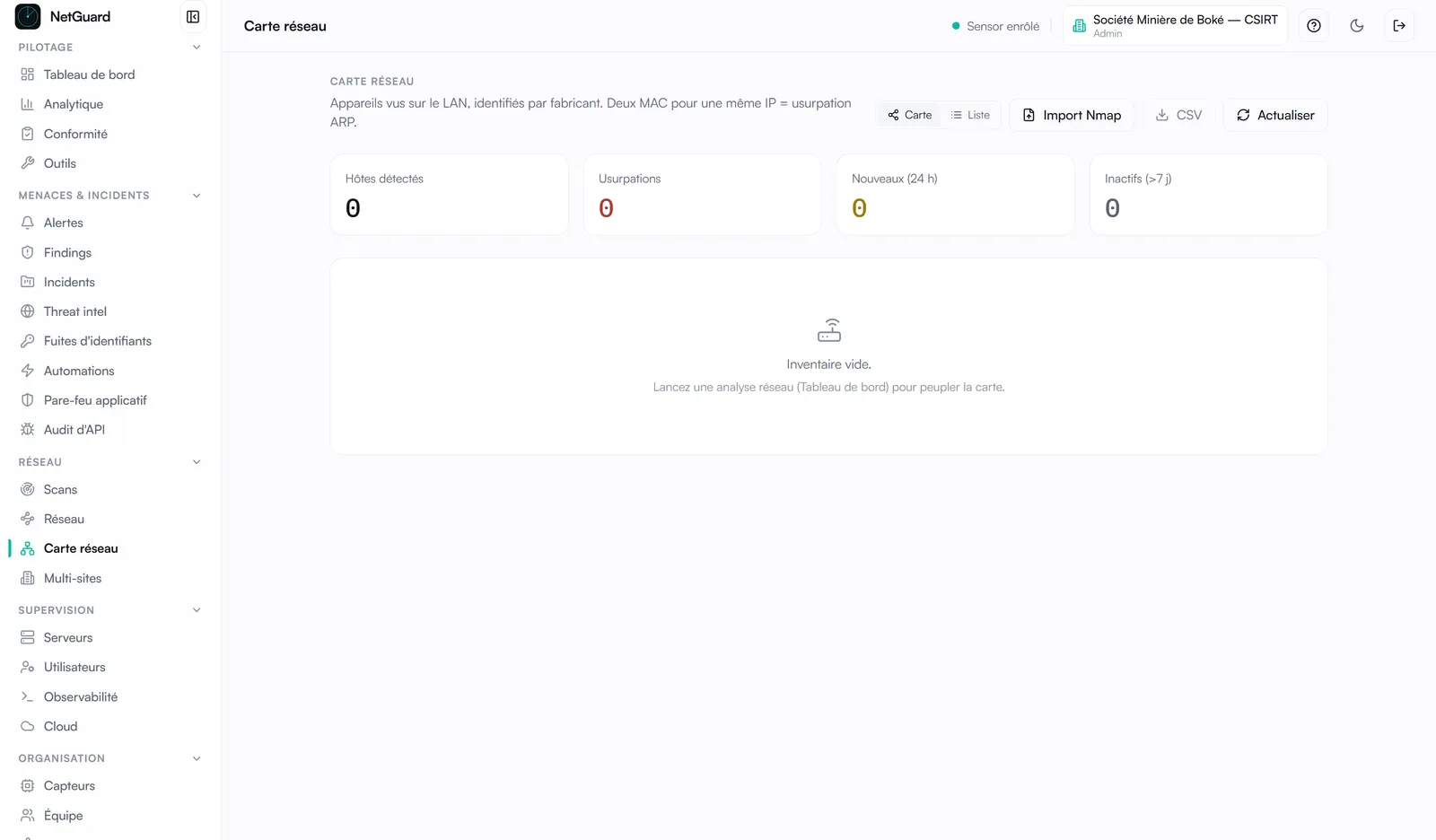
- Sensor coverage of the full network is still to be done.
- The scope is very broad; depth is uneven across it.
Stack
Tauri 2 · Rust (pcap, keyring)FastAPI · SQLAlchemy 2Celery · Redisscikit-learnMinIOCaddy